Purpose-built enterprise cyber-physical security appliances engineered for Saudi Arabia's critical infrastructure, smart cities, and industrial automation environments.

As the Kingdom of Saudi Arabia advances rapidly under the blueprint of Vision 2030, Riyadh has transformed into the primary digital hub of the Middle East. Mega-projects such as the expansion of the Riyadh Smart City Grid, the King Abdullah Financial District (KAFD), gigaprojects like NEOM and Qiddiya, and vast industrial hubs managed by MODON demand unprecedented security resilience. Modern cybersecurity in Riyadh is no longer merely a software firewall; it requires an integrated, resilient matrix of CE-certified hardware appliances, zero-trust network access (ZTNA), and hardened OT/ICS protection systems capable of operating seamlessly under harsh ambient conditions.
The regulatory authority oversight led by the National Cybersecurity Authority (NCA) through the Essential Cybersecurity Controls (NCA ECC-1:2018) and Critical Cybersecurity Controls (NCA CCC-1:2013) has mandated strict compliance frameworks for all government entities, critical national infrastructure (CNI) suppliers, and enterprise exporters. Foreign tech platforms entering the Riyadh market must satisfy stringent physical and logical security compliance parameters, ensuring data sovereignty under the Saudi Personal Data Protection Law (PDPL) while maintaining operational continuity.
Regulatory Compliance Insight: All imported cybersecurity appliances and integrated edge security gateways entering the Riyadh market must hold valid CE Marking (EMC Directive 2014/30/EU and Low Voltage Directive 2014/35/EU) and align directly with NCA ECC physical security controls (ECC-2-1) and operational technology controls (ECC-2-12).
Deploying electronic security systems and cyber-physical protection appliances in Riyadh presents distinct environmental challenges. Extreme desert summer ambient temperatures frequently exceed +50°C, combined with airborne particulate erosion (fine silica sandstorms) and severe electro-static discharge (ESD) risks. Legacy cybersecurity IT hardware frequently fails in non-air-conditioned edge environments such as oil/gas pump stations, smart city traffic control nodes, and utility substations across the Riyadh province.
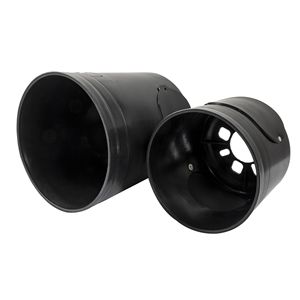
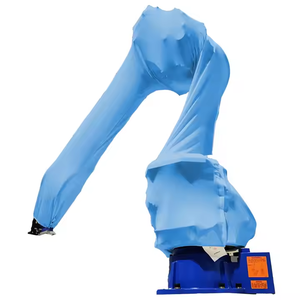
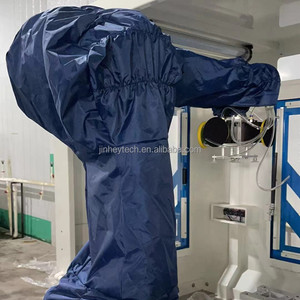
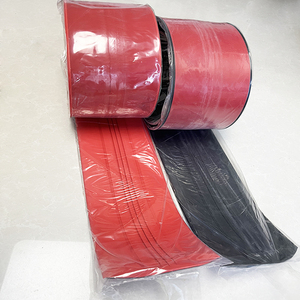
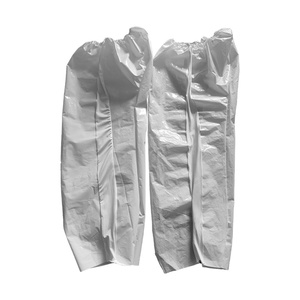
Our CE-certified hardware security platforms and protective physical cyber-shields are engineered specifically for this operational profile. Utilizing thermal-insulated, flame-retardant, anti-static, and IP67 waterproof/dustproof materials, our platforms ensure that critical encryption keys, deep packet inspection (DPI) engines, and industrial firewall appliances operate with 99.999% availability regardless of external conditions.
Tailored cybersecurity hardware and software integration deployment scenarios designed for high-consequence environments in the Saudi Arabian capital.
Protection of edge IoT traffic control boxes, CCTV municipal monitoring systems, and metro automation servers along the King Fahd Road and Riyadh Metro lines against physical tampering, unauthorized hardware insertion, and DDoS attacks.
Deployment of low-latency, CE-compliant hardware security modules (HSMs) and transaction encryption appliances complying with the Saudi Central Bank (SAMA) Cyber Security Framework for fintech hubs.
Hardened SCADA gateway enclosures and Modbus/DNP3 protocol inspection hardware securing electric substations, water desalination monitoring nodes, and distribution pipelines against industrial cyber threats.
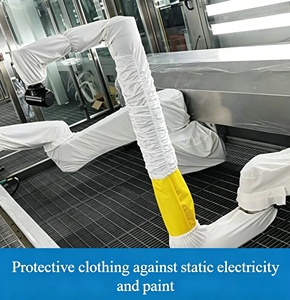
Flame-retardant, anti-static security shielding for cobots and automated material handling equipment inside 2nd and 3rd Industrial Cities in Riyadh, eliminating physically induced network disruptions.
Custom rack-level micro-perimeter firewalls and zero-trust isolated gateways fulfilling strict data localization and sovereignty parameters set by the Saudi Data & AI Authority (SDAIA).
Hardened sensor shields and anti-tamper edge communication units protecting biomedical dataloggers and supply chain tracking gateways across major Riyadh medical centers.
Sourcing cybersecurity equipment for the Middle East market requires evaluating physical endurance alongside logical threat mitigation capability. Below is a comparative technical assessment detailing why our CE-certified platforms outpace off-the-shelf IT appliances in Riyadh installations.
| Evaluation Parameter | Standard Commercial Cybersecurity Hardware | CE Certified Hardened Enterprise Platform | Riyadh Market Advantage |
|---|---|---|---|
| Operating Temperature | 0°C to +40°C (Standard indoor IT) | -40°C to +75°C Extended Range | Prevents thermal throttling during peak Saudi summer heatwaves. |
| Ingress Protection (IP) | IP20 / IP30 (Vulnerable to dust) | IP65 / IP67 Sealed Chassis Options | Resists fine silica dust ingress during haboobs (sandstorms). |
| Compliance & Certification | Basic FCC / RoHS | CE Certified (EMC/LVD), ISO 9001:2015 | Guarantees seamless Saudi Customs (SABER) import clearance. |
| OT Protocol Deep Packet Inspection | Standard HTTP/HTTPS/DNS filtering only | Modbus, DNP3, BACnet, Profinet, IEC 60870-5-104 | Protects critical utility SCADA networks from malicious payloads. |
| Hardware Root of Trust | Software-based key store | TPM 2.0 & AES-256 Crypto Engine | Fulfills NCA ECC-2-1 encryption key protection requirements. |
| Physical Shielding | Plastic or thin sheet aluminum | Flame-Retardant Anti-Static Hardened Armor | Eliminates ESD static interference in automated plants. |
Unlike conventional perimeter security, our platform integrates a proprietary Zero-Trust Hardware Isolation Architecture (ZTHA). Every edge node appliance functions as a self-contained enclave. In the event of a localized physical or logical breach at an edge installation in Riyadh, the hardware automatically isolates affected memory buses, securely revokes crypto keys stored within the onboard TPM 2.0 module, and sends an encrypted heartbeat signal back to the central Security Operations Center (SOC) via redundant satellite/cellular backhaul.
Navigating the cybersecurity procurement landscape in Riyadh requires a deep structural understanding of current government policy mandates and localized technology trends. B2B buyers, EPC contractors, and system integrators must align with several critical transformations:
Saudi Arabia has fully digitized its import regulation through the SABER System administered by the Saudi Standards, Metrology and Quality Organization (SASO). All cybersecurity platforms, gateway electronics, and physical armor enclosures must possess verifiable CE Certificates of Conformity and test reports issued by accredited notified bodies to obtain Product SASO Certificates and Shipment Certificates for clearance at Riyadh Dry Port or King Khalid International Airport.
Major regional procurement authorities—including Saudi Aramco (IKTVA program), SABIC, Saudi Electricity Company (SEC), and NWC—prioritize technology suppliers capable of delivering customized, modular hardware units that integrate seamlessly with local partner maintenance networks. Providing modular chassis and pre-configured protective hardware node kits accelerates local deployment SLA timelines from weeks to hours.
With the rapid launch of local data center regions by major cloud providers in Riyadh, enterprise workloads are shifting to hybrid cloud models. Consequently, demand is surging for edge computing appliances that inspect, filter, and encrypt data *before* it leaves the local enterprise boundary, guaranteeing compliance with the Saudi Cloud-First Policy and PDPL cross-border data transfer limitations.
Combining world-class precision manufacturing with deep compliance knowledge for the Saudi Arabian procurement landscape.
Our complete manufacturing pipeline operates under ISO 9001:2015 quality management systems, with full European CE accreditation ensuring smooth SABER import documentation into Saudi Arabia.
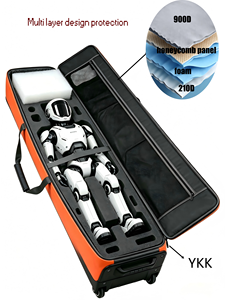
From custom anti-static robot protective armor to bespoke server enclosure dimensions, we customize hardware specifications to exact OEM and system integrator requirements.
Established export channels to Saudi Arabia (Riyadh, Jeddah, Dammam) with full support for customs clearance documentation, Certificate of Origin (COO), and commercial invoices.
Key technical, regulatory, and purchasing answers for system integrators and IT buyers in Saudi Arabia.
Yes. All our products carry formal CE certification (EMC & LVD directives) and ISO 9001:2015 quality manufacturing compliance. We provide complete technical files and lab test reports required for SABER portal certification and customs clearance at Riyadh ports.
Our hardware systems are engineered with dedicated Hardware Root of Trust (TPM 2.0 modules), encrypted storage enclaves, and physically tamper-evident enclosures that directly support NCA ECC physical security controls (ECC-2-1) and operational technology cybersecurity controls (ECC-2-12).
Absolutely. We specialize in custom-fit thermal protection, flame-retardant anti-static fabrics, and IP67 industrial node boxes engineered to withstand ambient heat exceeding +55°C and severe silica sand dust exposures typical of the Riyadh region.
Standard production and export dispatch lead times range from 7 to 15 business days depending on order complexity. Air freight shipments to King Khalid International Airport (RUH) typically arrive within 3-5 days after dispatch.
Yes. System integrators and project contractors bidding on Saudi government or infrastructure tenders can request sample units for evaluation, mechanical fit testing, and security audit verifications.
Simply click the "Contact Us" button anywhere on this page to open our direct consultation window. Our technical export specialists respond within 24 hours with complete pricing, MOQs, and technical data sheets.
Partner with an experienced global supplier equipped to meet Saudi Arabia's rigorous security standards, climate demands, and project SLAs. Speak directly with our technical export team today.