Direct sourcing options featuring validated high-throughput network security hardware and industrial-grade appliances.
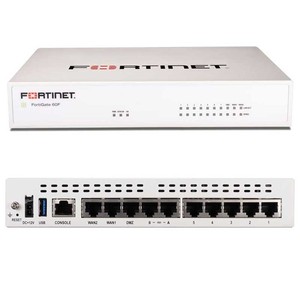
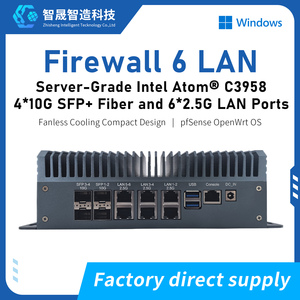
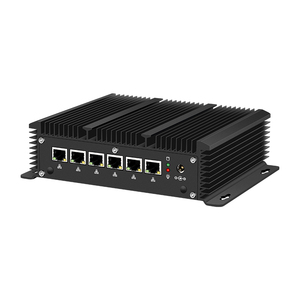
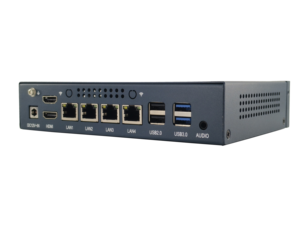
In the era of hyper-connected enterprise networks, distributed cloud workloads, and escalating cyber threat vectors, the global network security perimeter has fundamentally shifted. Modern organization security architectures no longer rely solely on legacy packet-filtering firewalls. Instead, the convergence of Next-Generation Firewalls (NGFW), specialized Web Application Firewalls (WAF), and open-source hardware ecosystems (such as pfSense, OPNsense, and enterprise Linux distributions) forms the cornerstone of zero-trust cybersecurity strategies.
Sourcing network firewall appliances requires enterprise procurement leads, MSSPs (Managed Security Service Providers), and IT infrastructure architects to evaluate not just top-line throughput numbers, but underlying microarchitecture specifications. Crucial criteria include packet processing acceleration (Intel AES-NI, SoC4), NIC controller stability (Intel i210 vs I226-V 2.5GbE), physical interface density (10G SFP+ optical uplinks), passive fanless thermal dissipators, and total cost of ownership (TCO) across 3-to-5-year life cycles.
This whitepaper synthesizes market data, hardware component analysis, and OEM/ODM manufacturing standards to serve as an authoritative sourcing benchmark for enterprises evaluating global web firewall factories, suppliers, and white-box device vendors.
Selecting the appropriate hardware tier impacts network latency, deep packet inspection performance, and deployment flexibility. The matrix below contrasts enterprise-grade security appliances across key technical indicators:
| Architecture Class | Primary Processing Engine | Interface Scalability | OS / Firmware Support | Ideal Deployment Intent |
|---|---|---|---|---|
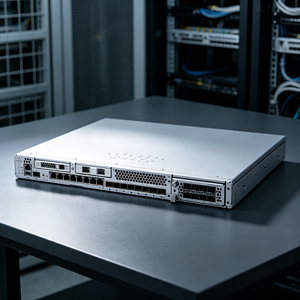
| Proprietary NGFW (e.g., Fortinet / Cisco FPR) | Custom ASICs (SoC4 / CP9) + Multi-core x86 | 1G RJ45 up to 100G QSFP28 | Vendor Proprietary OS (FortiOS / FTD) | High-throughput perimeter, branch SD-WAN, unified threat management (UTM). |
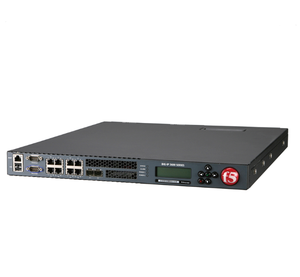
| Dedicated L7 WAF (e.g., F5 BIG-IP Appliance) | Intel Xeon Multi-Socket + Cryptographic Offload Co-processors | 10G SFP+ / 40G QSFP+ | BIG-IP TMOS / Enterprise Linux | API protection, reverse-proxy SSL termination, DDoS layer 7 mitigation, bot control. |
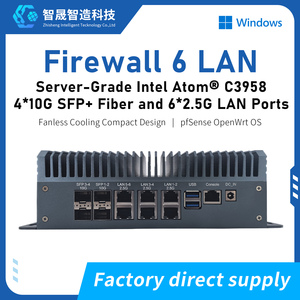
| Industrial Fanless x86 Appliances (Intel Atom / Celeron) | Intel Atom C3958 (16C) / Celeron J1900 / N5105 | 2.5GbE I226-V + 10G SFP+ Dual/Quad | pfSense, OPNsense, OpenWrt, VyOS, Ubuntu Server | Edge branch offices, custom MSSP deployments, industrial IoT gateways, SMBs. |
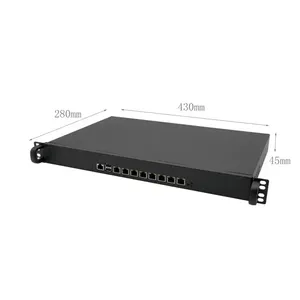
| 1U Enterprise Rackmount x86 Servers (Sophos / Custom OEM) | Intel Core i5/i7 or Xeon Scalable + DDR4/DDR5 ECC RAM | 8 to 16 Port Gigabit / SFP+ Expansion PCIe slots | Custom Enterprise Linux / Sophos XGS OS | Data center edge, high-concurrency VPN concetration, deep malware sandboxing. |
Strategic purchasing direction derived from global enterprise IT infrastructure migrations and hardware supply chain evolution.
Standard 10/100/1000M copper interfaces are rapidly becoming bottleneck points due to Wi-Fi 7 rollouts and multi-gigabit fiber ISP connections. Global firewall procurement specs now mandate a baseline of Intel I226-V 2.5GbE ports paired with at least two or four 10G SFP+ optical ports to handle high-bandwidth internal VLAN routing without packet dropping.
Enterprises are avoiding proprietary vendor lock-in by sourcing flexible x86 hardware platforms. White-box firewall devices built on Intel Atom C3958 (16-Core) or Core processors allow organizations to deploy open-source enterprise firewalls like pfSense or OPNsense today, and transition to proprietary SD-WAN software or custom eBPF packet filters tomorrow.
Over 90% of web traffic is encrypted via TLS 1.3. Inspecting encrypted malicious payloads at Layer 7 requires massive computational throughput. Procurement specs increasingly prioritize CPUs featuring integrated hardware encryption acceleration (AES-NI, QuickAssist Technology / QAT) to perform inline deep packet inspection without introducing latency spikes.
Branch offices, retail environments, and industrial facilities lack specialized server rooms with active cooling. High-reliability firewall suppliers are leveraging passive extruded aluminum heatsinks. Eliminating mechanical fan failure points dramatically increases Mean Time Between Failures (MTBF) and minimizes field maintenance overhead.
Hardware supply chain security is a top priority for corporate procurement. Buyers demand hardware platforms featuring TPM 2.0 (Trusted Platform Module), UEFI Secure Boot support, and open BIOS firmware verification to ensure the firewall hardware cannot be compromised via low-level rootkits during manufacturing or transit.
Key indicators when auditing network security hardware manufacturers and wholesale suppliers.
Top factories exclusively use original Intel network controllers (such as Intel i210, I225-V B3/I226-V, and X520/X710 10G chips) avoiding refurbished or gray-market components that cause driver instability and high packet drops under load.
Industrial firewall manufacturers execute 72-hour continuous burn-in testing under 100% CPU and network loopback load in high-temperature environmental chambers (up to 60°C) to guarantee chassis thermal dissipation stability.
Enterprise ODM suppliers offer custom BIOS logo injection, customized port layout silk-screening, custom metal enclosure colors, and pre-installed core open-source security images for turn-key OEM distribution.
Whether you require customized 1U rackmount WAF appliances, low-power fanless branch firewalls, or bulk original enterprise security routers, our technical engineering team provides full OEM/ODM support.
Technical answers covering procurement, software compatibility, hardware validation, and international logistics.
Optimize your network security infrastructure with enterprise-validated firewall appliances, custom ODM white-box hardware, and high-throughput web application protection platforms. Request immediate quotation, detailed hardware datasheets, and sample evaluation units.