China Wholesale Incident Response Factories & Exporter

Industrial Whitepaper & Global B2B Sourcing Guide for Heavy-Duty Protective Gear, Robot Enclosures & Machine Asset Incident Mitigation Solutions

Featured Incident Response & Protection Solutions

Direct OEM/ODM Factory Exports: Custom-engineered robot jackets, gearbox shields, cobot covers, and marine asset protective equipment built for harsh operational environments.
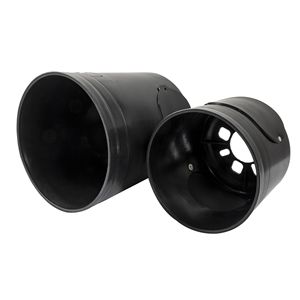
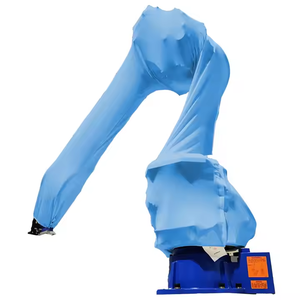
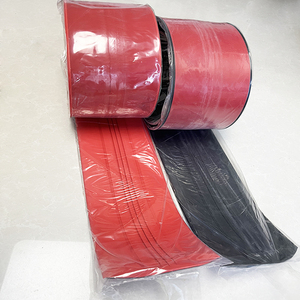
Custom Neoprene Shear Bot Gear Box Shield
Heavy-Duty Machinery
RW Custom Fit Neoprene Shear Bot Gear Box Shield for Farm Equipment
Inquire Now
Robot Protective Cover Skeleton Design
Industrial Robotics
Custom Skeleton Design Robot Protective Cover by Industrial Manufacturer
Inquire Now
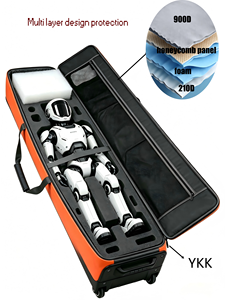
Intelligent Robot Protective Box Tool Kit
Enclosure Systems
Customized Waterproof Intelligent Robot Protection Box & Tool Kit
Inquire Now
Flame Retardant Robot Protective Cover
Heat & Anti-Static
Factory Flame Retardant Heat Insulation Cover for Kuka ABB Kawasaki
Inquire Now
Keel Guard for Inflatable Boats
Marine Asset Protection
Heavy-Duty Keel Guard for Inflatable & Fiberglass Boats Protection
Inquire Now
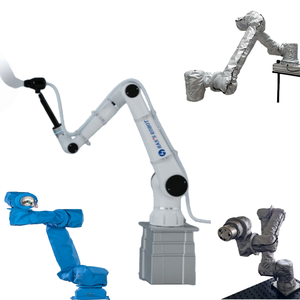
Robot Protective Suit Cobot Cover
Cobot Solutions
Universal Robot Protective Suit for JAKA, HANS, KINOVA Arm Systems
Inquire Now
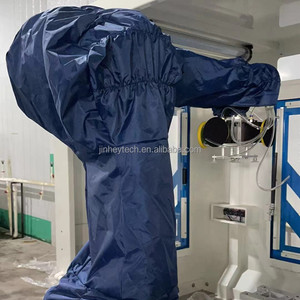
Food Grade Robot Arm Protective Clothing
Food & Pharma Grade
Waterproof & Dustproof Food-Grade Robot Arm Protective Clothing
Inquire Now
Multi Function Robot Jacket
Multi-Hazard Armor
Multi-Function Industrial Robot Jacket: Oilproof, Waterproof & Heat-Resistant
Inquire Now
15+
Years Manufacturing Mastery
ISO 9001
Quality Assurance Certified
85+
Global Export Markets
100%
Custom OEM/ODM Fit Precision

Executive Whitepaper: Industrial Incident Response & Asset Shielding Ecosystems

Analyzing China’s B2B Wholesale Manufacturing Landscape for Robotic Suits, Machine Protection, and Emergency Equipment Armor

In modern automated manufacturing, chemical processing, agricultural operations, and marine logistics, industrial incidents—ranging from high-temperature spatter, corrosive liquid ingress, static charge accumulation, to abrasive particulate wear—represent multimillion-dollar operational risks. Industrial incident response and preventative asset shielding have evolved from simple canvas wraps into highly engineered material protection systems.

China has established itself as the world’s preeminent hub for wholesale incident response gear manufacturing. Advanced OEM/ODM factories in industrial clusters across Jiangsu, Zhejiang, and Guangdong combine material science expertise with laser-cutting automation to engineer custom robotic jackets, gearbox shields, and harsh-environment protective enclosures. As global manufacturing scales up its deployment of 6-axis articulated arms (e.g., KUKA, ABB, FANUC, Yaskawa) and collaborative cobots (Universal Robots, JAKA, Kinova), Chinese exporters provide the necessary protective ecosystem to guarantee uptime, extend machine lifecycle, and prevent catastrophic line stoppages.

Information Gain Insight for Global Sourcing Directors: Preventative equipment protection yields an average ROI of 480% over a 24-month operational cycle by reducing unscheduled downtime, preventing joint contamination in articulated arms, and slashing repair expenditures in high-wear agricultural and marine sectors.

Material Science & Technical Architecture

Selecting the correct polymer, composite matrix, or woven fire-retardant synthetic is critical to designing effective incident response suits and industrial shields. Chinese factories utilize proprietary fabric formulations tailored to specific physical and chemical stress vectors:

Nomex & Kevlar Composites

Engineered for foundry, welding, and laser-cutting applications. Resistant to direct metal spatter up to 1200°C, self-extinguishing (UL94 V-0), and impervious to structural tearing under rapid 6-axis robot movement.

Chloroprene & Neoprene Elastomers

Specially compounded for heavy machinery gearbox shields, agricultural shear bots, and marine keel guards. Provides high tensile elongation, ozone resistance, and absolute liquid tightness against synthetic gear oils.

Anti-Static (ESD) TPU & PU Fabrics

Critical for automotive spray painting and electronics cleanrooms. Surface resistivity maintained between 10^6 to 10^9 ohms/sq to eliminate static discharge incidents that ignite volatile organic compounds (VOCs).

Material Performance Specification Matrix

Material Formulation Thermal Range (°C) Chemical Resistance Tensile Strength Primary Industrial Application
Silicone Coated Fiberglass -50°C to +550°C High (Acids & Alkalis) 2200 N/5cm Automotive Welding & Metal Casting Robots
Food-Grade Polyurethane (FDA) -30°C to +90°C High (Fats, Oils, Cleaners) 1400 N/5cm Food & Beverage Processing Robot Arms
High-Density Neoprene Rubber -40°C to +120°C Moderate (Hydraulic Fluid, Saltwater) 1800 N/5cm Agricultural Machinery & Marine Keel Protection
Anti-Static Microporous Laminate -20°C to +80°C Moderate (Solvents & Paints) 950 N/5cm Automotive Paint Shop & Electronics Assembly

Future Procurement & Sourcing Trends (2025–2030)

Strategic forecast for B2B procurement officers, supply chain managers, and OEM buyers

1. Integration of Smart Sensing Textiles

The next generation of incident response covers from top Chinese suppliers will feature embedded micro-sensors. These smart jackets monitor micro-environmental temperature spikes, moisture ingress, and pressure drops inside the robot housing, transmitting real-time diagnostics via IoT gateways to predictive maintenance platforms.

2. Modular & Universal Cobot Armor

As human-robot collaboration (cobots) accelerates in small-to-medium enterprises, procurement shifts away from rigid single-model jackets toward modular, quick-release protective suits. Zippered and Velcro-sealed segmented armors allow rapid replacement of high-wear wrist or elbow sections without stripping the entire sleeve.

3. Zero-VOC & Eco-Compliant Polymers

Global environmental regulations (REACH, RoHS, SVHC) are pushing Chinese manufacturers to eliminate halogenated flame retardants and toxic plasticizers. Leading export factories now offer eco-certified silicone-coated textiles and recyclable TPU substrates that satisfy European and North American sustainability mandates.

Enterprise Strengths & OEM/ODM Manufacturing Advantage

Why global industrial leaders partner with specialized Chinese wholesale exporters

Our direct-factory manufacturing framework bridges state-of-the-art digital prototyping with heavy-duty textile craft. Operating dedicated industrial cleanrooms, 3D CAD modeling suites, and multi-axis laser cutting machines, our facility translates complex machine geometries into perfectly fitted protective suits.

  • Precision 3D Scanning for Custom Skeleton & Armature Matching
  • Ultrasonic & High-Frequency Seam Sealing for Absolute Liquid & Dust Ingress Protection
  • Rapid Prototyping: 3-5 Days Sample Turnaround for Specialized Industrial Orders
  • Rigorous Batch Testing: Flame Propagation, Abrasion Cycles, and Hydrostatic Pressure Tests

OEM/ODM Customization Pipeline

  1. CAD Step File Submission: Share your robot arm (ABB, KUKA, FANUC, Universal Robots) or machinery dimensions.
  2. Hazard Matrix Analysis: We analyze thermal, chemical, mechanical wear, and static electrical risks.
  3. Material Engineering: Tailored fabric layering (Nomex, Kevlar, ESD TPU, Neoprene).
  4. Prototype & Fit Verification: Laser cutting, trial tailoring, and physical joint movement validation.
  5. Bulk Wholesale Export: ISO 9001 certified batch production with custom branding and global logistics support.

Frequently Asked Questions (FAQ)

Comprehensive answers for procurement directors, industrial engineers, and wholesale importers

1. Why should global buyers source industrial robot protective covers and incident shields from China?
China offers an unmatched industrial cluster ecosystem that integrates raw material weaving, specialized polymer coating, digital pattern cutting, and skilled technical sewing. Chinese export factories provide significant cost efficiencies (30% to 50% savings compared to European suppliers), rapid prototyping lead times (3-5 days), scalable wholesale capacity, and extensive experience customizing covers for major robot brands like KUKA, ABB, FANUC, Yaskawa, and Universal Robots.
2. How do I determine the correct material specification for my industrial environment?
Material selection depends on primary hazard exposure:
• High Heat & Welding Spatter: Silicone-coated fiberglass or Nomex/Kevlar blends (rated up to 1000°C+).
• Paint Spraying & Electronics Assembly: Anti-static (ESD) polyurethane or microporous laminate with surface resistivity of 10^6-10^9 ohms/sq.
• Food Processing & Pharmaceutical Cleanrooms: FDA-compliant, waterproof, grease-resistant polyurethane with sealed hygienic seams.
• Agricultural Machinery & Marine Gearboxes: Heavy-duty abrasion-resistant Neoprene or Chloroprene rubber.
3. Can Chinese factories produce custom-fit protective suits for non-standard or proprietary machinery?
Yes. OEM/ODM factories utilize 3D CAD modeling and digital spatial scanning to custom design covers for non-standard equipment, specialized end-effectors, custom cobots, agricultural shear bots, and marine hulls. Buyers simply provide 3D CAD files (.STEP/.IGES) or physical dimensions for custom pattern generation.
4. What is the typical Minimum Order Quantity (MOQ) and sample lead time?
Standard OEM sample turnaround is 3 to 7 business days. For customized products, MOQs typically range from 5 to 10 units per specific model/size, while standard catalogue protective suits have flexible wholesale MOQs starting at 1 to 5 pieces to support small-batch trial orders.
5. Do protective suits interfere with robot articulation, torque, or range of motion?
Engineered protective jackets are constructed with accordion expansion pleats, elasticated rotary joint cuffs, and low-friction internal linings. This guarantees 100% full axis rotation (J1 through J6) without imposing strain on servo motors or causing thermal trap issues inside the gear housing.
6. What international quality standards and certifications do Chinese incident response exporters comply with?
Leading exporters comply with ISO 9001 quality management systems, CE directives, flame retardancy standards (UL94 V-0, DIN 4102 B1), ESD static protection testing (EN 1149), and food safety compliance (FDA, EU 10/2011) for food processing robotics.
7. How do specialized covers protect marine assets like inflatable boats and fiberglass keels?
Keel guards and marine incident response shields utilize high-density polymer matrices (polyester-reinforced PVC, elastomeric rubbers, neoprene) engineered to absorb mechanical impact and resist abrasive forces from concrete ramps, rocks, sand, and oyster beds, protecting hull integrity and preventing structural compromise.
8. What shipping and export packaging methods are used for global B2B delivery?
All export products are vacuum-sealed or moisture-proof packed in heavy-duty 5-ply corrugated master cartons, reinforced with corner protectors and palletized with stretch wrapping. Express air freight (DHL/FedEx/UPS) is available for urgent sampling, while DDP, FOB, and CIF ocean/rail transport handles volume wholesale shipments.

Accelerate Your Industrial Protection Strategy Today

Partner with China’s leading wholesale incident response factory. Submit your machine specifications, request a custom OEM quote, or speak directly with our engineering sales team.

Inquire Now