Explore our export-ready, heavy-duty industrial protection solutions engineered for automated robot arms, severe operational environments, and cyber-physical perimeter resilience.
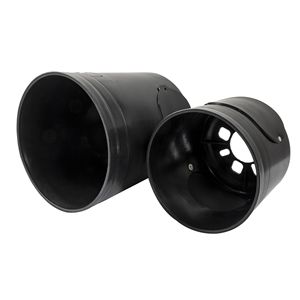
Designed for severe farm equipment and critical gearing operations, offering high-tenacity oil, dust, and physical impact isolation.
Inquire Now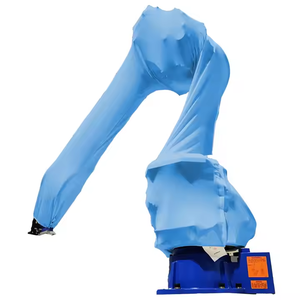
Custom-tailored industrial skeleton cloth jackets built to safeguard high-axis multi-articulated robots against abrasive debris and thermal wear.
Inquire Now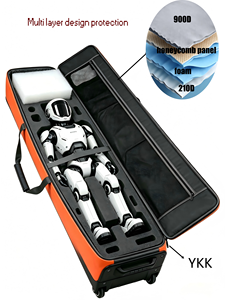
Heavy-duty IP68 intelligent toolbox and sealed physical enclosure safeguarding critical control electronics and diagnostic kit payloads.
Inquire Now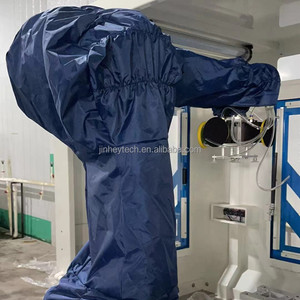
Factory-customized heat insulation suit for KUKA, ABB, and Kawasaki welding lines preventing static discharge and spatter build-up.
Inquire Now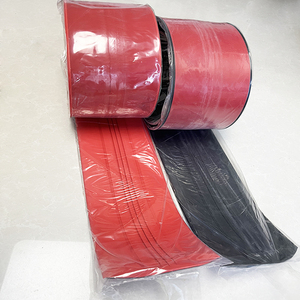
Ultra-tough abrasive barrier guarding unmanned surface vessels and inflatable bots from sand, rock impact, and underwater hazards.
Inquire Now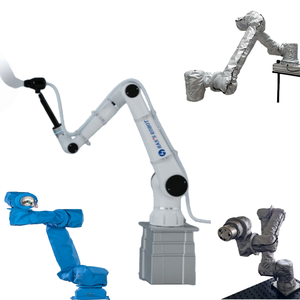
Precision-fitted dynamic sleeve protecting collaborative robot joints from ambient particulates without restricting 6-DOF movement.
Inquire Now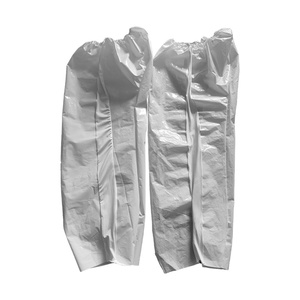
FDA-compliant non-contaminating protection jacket engineered for sanitary washdown environments and hygienic food processing facilities.
Inquire Now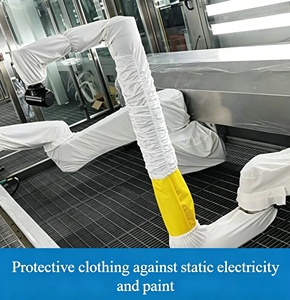
Comprehensive multi-layer protective armor designed for heavy foundry, stamping, and aggressive chemical processing plants.
Inquire NowRooted in rigorous ISO quality management and advanced material science, our engineering capabilities bridge the gap between physical durability and operational cyber-physical security.
Every robot jacket, equipment shield, and hard-shell case is produced under strict quality management systems, guaranteeing precise tolerances, zero thread friction, and batch-to-batch consistency.
From 6-axis articulated robots (ABB, KUKA, Fanuc) to custom cobots (UR, JAKA, Kinova), we utilize 3D laser scan profiling to design dynamic suits that preserve full joint kinematics.
Our material repository includes fire-retardant Nomex, abrasion-resistant Kevlar weaves, anti-static ESD composites, and food-safe polyurethane coatings engineered for extreme thermal and chemical resistance.
With established supply chains across Europe, North America, Southeast Asia, and the Middle East, we handle complex customs documentation, bulk freight packaging, and direct door-to-door delivery.
All protective fabrics and sealing components strictly adhere to RoHS, REACH, UL 94 V-0 flame retardation standards, and anti-static ESD safety thresholds, reducing liability risks for enterprise operators.
Our senior mechanical engineers work hand-in-hand with your operational technology (OT) teams to assess physical vulnerability vectors, provide digital CAD blueprints, and refine prototypes within days.
In modern industrial automated manufacturing, the phrase Zero Trust has evolved far beyond network micro-segmentation, identity access management (IAM), and endpoint detection software. As physical industrial robots, automated guided vehicles (AGVs), collaborative cobots, and mission-critical gearboxes become tightly interconnected node endpoints within Industry 4.0 shop floors, their physical vulnerability vectors directly compromise cyber-physical integrity. A compromised robot joint jammed by ambient grinding dust, a short-circuit caused by electrostatic discharge (ESD) in a painting line, or moisture ingress into an autonomous control unit represents a total breach of system availability—the core pillar of the CIA triad in Operational Technology (OT) security.
Traditional Zero Trust Frameworks (such as NIST SP 800-207) mandate continuous verification of every entity, session, and packet across an enterprise network. However, in heavy industrial manufacturing environments—such as automotive welding, aerospace titanium machining, pharmaceutical cleanrooms, and food processing facilities—physical degradation of the robot payload acts as an unauthenticated attack vector. Environmental contaminants like metal filings, corrosive coolants, intense UV exposure, and thermal blast heat inflict micro-abrasions on mechanical seals. Once liquid or particulate matter breaches internal servo-motors and encoder interfaces, hardware telemetry becomes erratic, triggering unexpected emergency stops (E-Stops) or false diagnostic reads that malicious software agents can exploit.
As China’s premier enterprise supplier and exporter of specialized physical protection systems, our solutions enforce strict **Layer 0 Zero Trust Isolation**. By encapsulating complex robot linkages, gearboxes, and cobot arms within custom-engineered, multi-ply protective suits, we establish a impervious kinetic barrier between the physical environment and sensitive control mechanics.
Zero Trust physical enforcement demands customized polymer formulations tailored to the precise thermodynamic and chemical profile of the shop floor:
As global supply chains realign around automated efficiency and resilient operational technology, corporate procurement strategies are undergoing four major paradigm shifts.
Procurement teams are shifting away from cheap, disposable static covers toward lifecycle-optimized, modular protective suits. High-grade custom armors extend Mean Time Between Failures (MTBF) of industrial robots by over 300%, slashing unplanned downtime costs that typically exceed $20,000 per idle hour on automotive assembly lines.
International enterprise buyers now require certified material origin, ISO quality documentation, and strict adherence to environmental regulations (RoHS/REACH). Sourcing directly from certified Chinese OEM exporters guarantees full supply chain transparency and verifiable batch testing certificates.
Future equipment protection relies on quick-release modular segments (zippers, heavy-duty Velcro seals, magnetic joint cuffs). Instead of taking an entire 6-axis robot offline for maintenance, plant technicians can replace individual joint sleeves in under 10 minutes during scheduled shifts.
The technological horizon for industrial protection is rapidly expanding beyond static fabric barrier design. As Smart Factories adopt edge AI computing, IoT sensors, and autonomous collaborative workcells, hardware protective jackets are evolving into **Intelligent Cyber-Physical Armor Systems**.
Our R&D divisions are pioneering the integration of flexible micro-sensor arrays embedded directly into the fabric layers of robot covers. These sensors continuously monitor micro-vibrations, ambient moisture accumulation, joint temperature spikes, and tear hazards. By transmitting real-time telemetry back to central Supervisory Control and Data Acquisition (SCADA) platforms, plant managers receive automated predictive maintenance alerts long before a physical breakdown occurs.
To ensure 100% unrestricted motion envelope execution for high-speed industrial cobots (such as Universal Robots, JAKA, and Kinova), modern suit design relies heavily on dynamic 3D CAD modeling. By simulating maximum joint rotation (up to ±360 degrees on wrists) in digital twin software, our custom skeleton jackets eliminate fabric bunching, pinch points, and mechanical drag, preserving payload precision down to sub-millimeter tolerances.
In response to global ESG mandates, next-generation protective clothing utilizes recyclable thermoplastic polyurethanes (TPU) and fluorine-free water-repellent treatments. These eco-designed textiles offer superior chemical durability while significantly lowering the carbon footprint associated with industrial consumable disposal.
Get clear, expert answers on custom sizing, ISO standards compliance, export lead times, and minimum order requirements.
Upgrade your industrial automation protection today. Our technical engineers are standing by to review your CAD drawings, supply material swatch samples, and prepare competitive factory-direct quotes.
Inquire Now